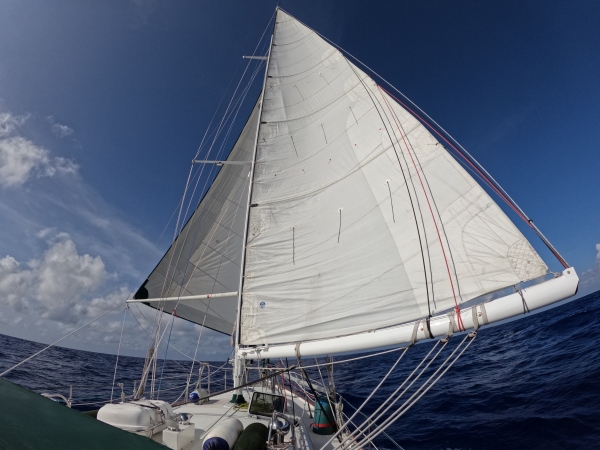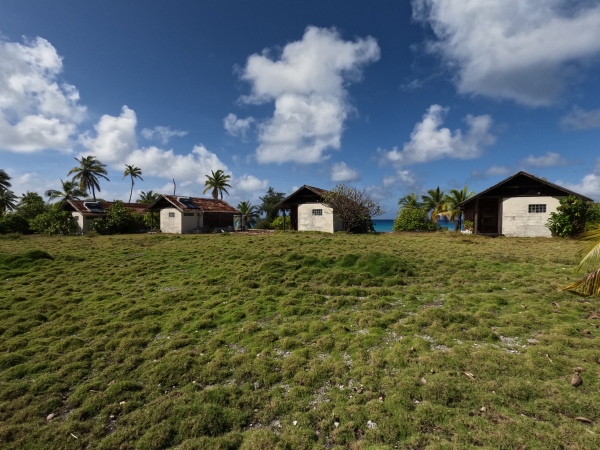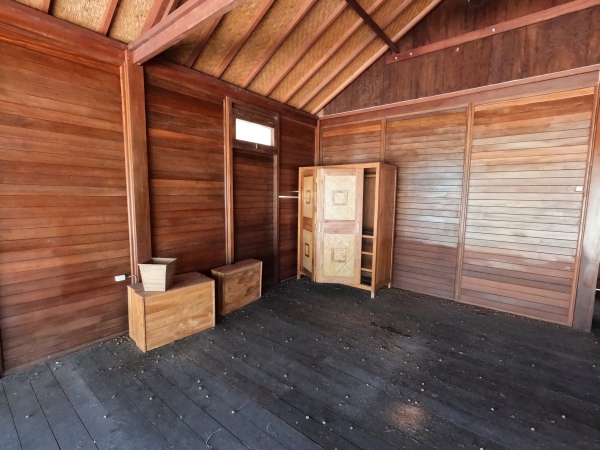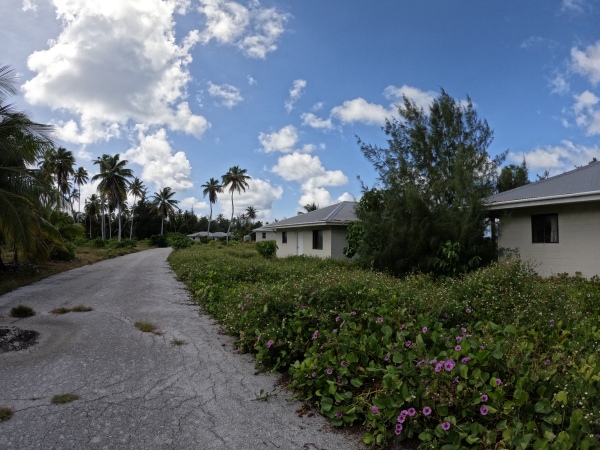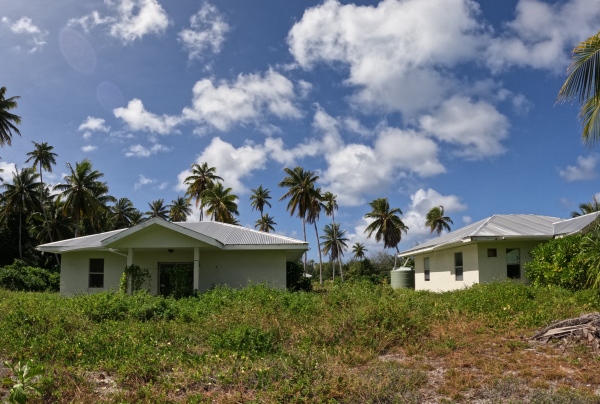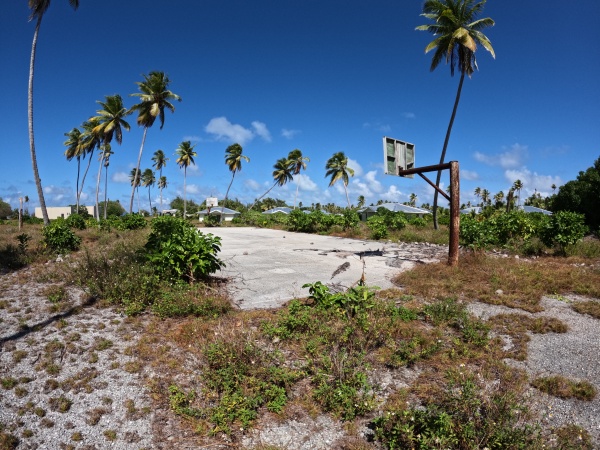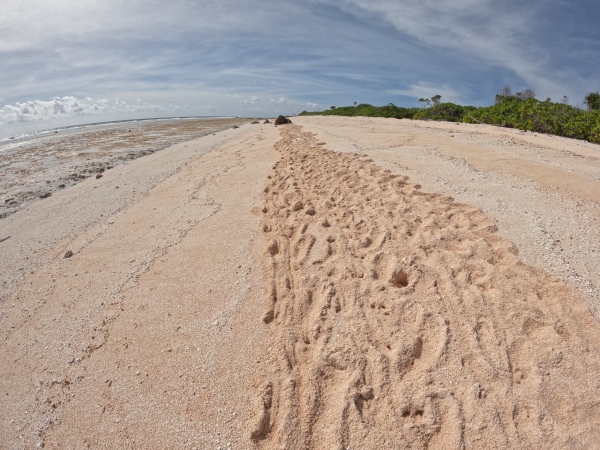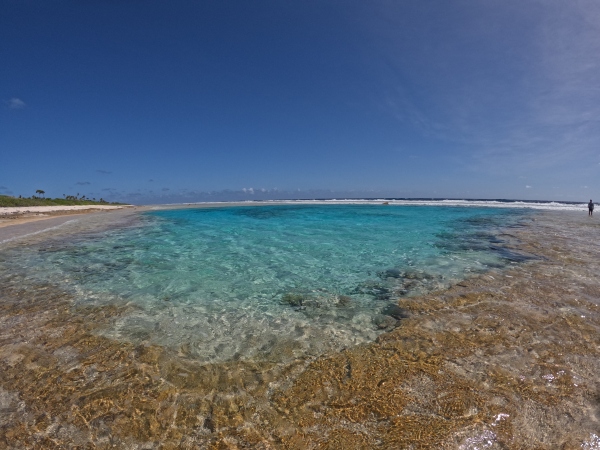
We enjoyed great downwind sailing from Rongerik Island (an uninhabited island) to Rongelap Island—an island where only three locals currently live and work.
On the way, we caught a Mahi Mahi. When the fishing reel drag let out a sudden, rapid sound, John shouted, “Fish on!” The cats became motionlessly focused. I quietly said, “Oh no.” Gaffing the fish is usually my job, and I was relieved that it worked on the first try this time. It seems the trick is to gaff behind the gills.
Rongelap Atoll is about 75 miles from Bikini Atoll; as such, it is one of the four nuclear-affected atolls. According to Wikipedia, “It is historically notable for its close proximity to US hydrogen bomb tests in 1954, and was particularly devastated by fallout from the Castle Bravo test.”
Three local caretakers on Rongelap Island work for the U.S. Department of Energy, rotating on a four-to-six-month schedule. Knowing there were people on the island made me feel secure. It became our daily routine to say hello and chit-chat with them during our stay.
The Aftermath (Source: https://en.wikipedia.org/wiki/Rongelap_Atoll#External_links)
In 1991, the people of Rongelap and Jeton Anjain received the Right Livelihood Award “for their steadfast struggle against United States nuclear policy in support of their right to live on an unpolluted Rongelap island.”
In 2012, the US government, under the Barack Obama administration, reasserted its position that it had satisfactorily compensated the Rongelap victims.
In 2019, Chinese investor Cary Yan leased a large part of the atoll for a proposed special economic zone. This was seen as part of ongoing efforts by China to expand its reach into the Pacific and conduct “chequebook diplomacy” against Taiwan. After Yan’s arrest in Thailand in 2020, the project was abandoned; he was deported to the United States in 2022 for allegedly bribing elected officials in relation to this case.