The Marshall Islands are vast, featuring many beautiful atolls, each with multiple islands. Few sailboats visit due to the distance, and local boating facilities are scarce. Our main reason for being in the Marshalls, however, is John’s wish to visit Bikini Atoll.
In Majuro, the capital, we applied for permits to visit selected atolls. The authorization required three official signatures: the Internal Affairs Office, the Mayor of the Atoll, and the Chief/Owner of the Atoll. Some approvals were quick, others slow. It took us about three weeks and numerous office visits to secure all five authorizations.
Maloelap is about a 20-hour sail from Majuro. Google satellite maps showed it covered in a thick blanket of green coconut trees.
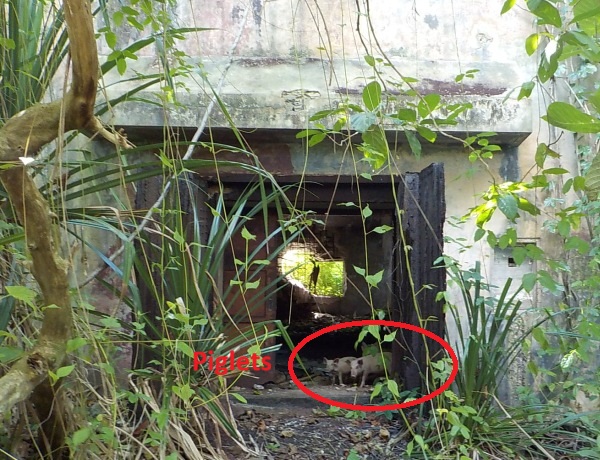
Upon arrival, we showed our permit to a local policeman and arranged an island tour. When we met him for the tour, he was concerned: the local airplane’s arrival had been canceled because pigs had dug up the runway. It seems some islanders allow their pigs to roam freely despite regulations to contain them. I recall reading that some locals jokingly call the airline “Air Maybe” instead of “Air Marshall Islands.”
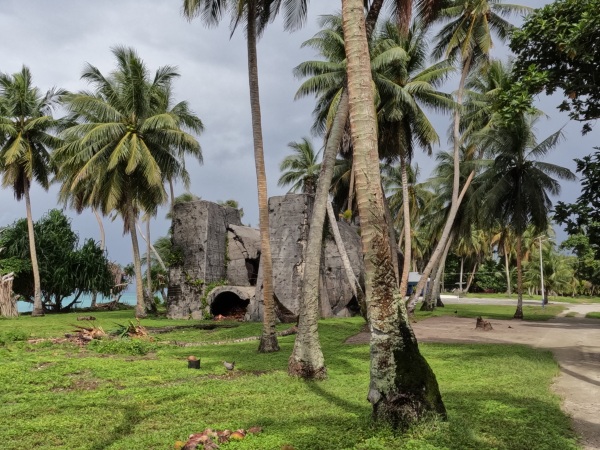
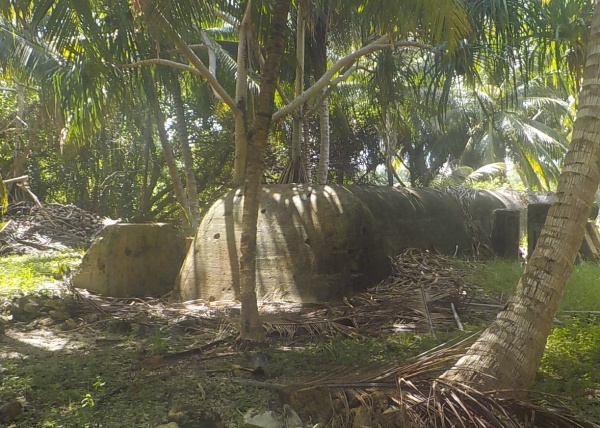
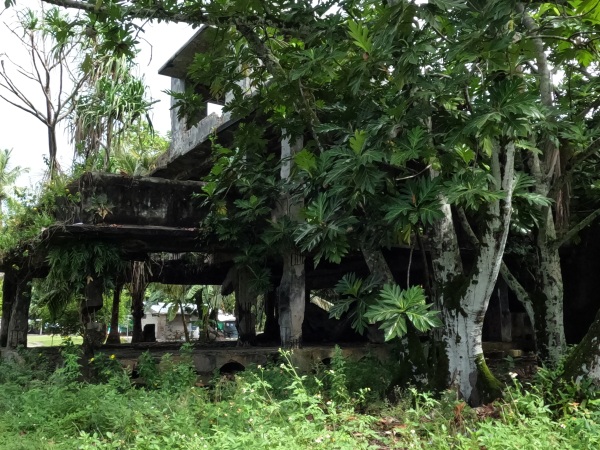
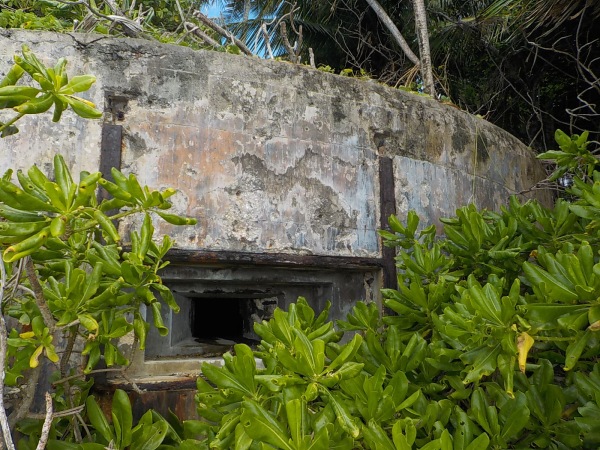
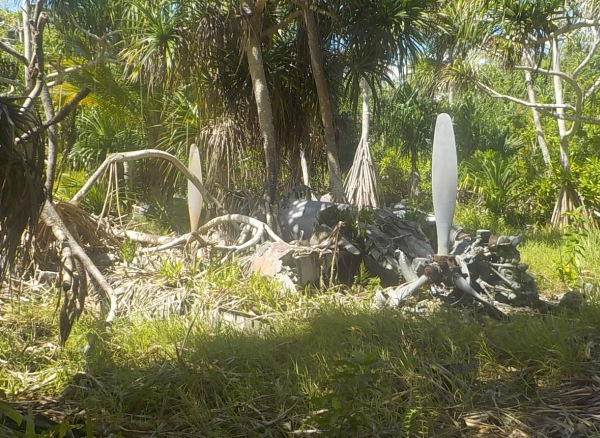
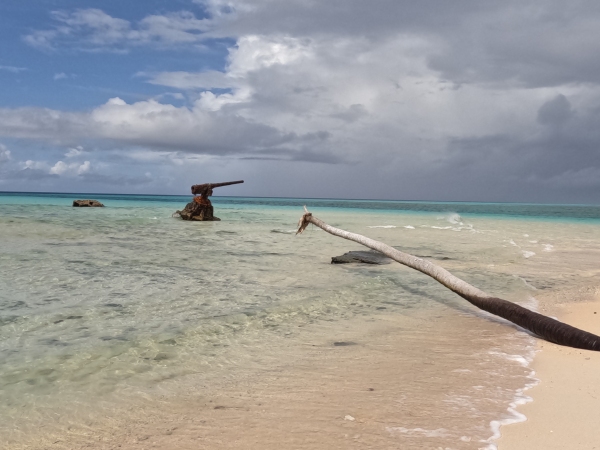
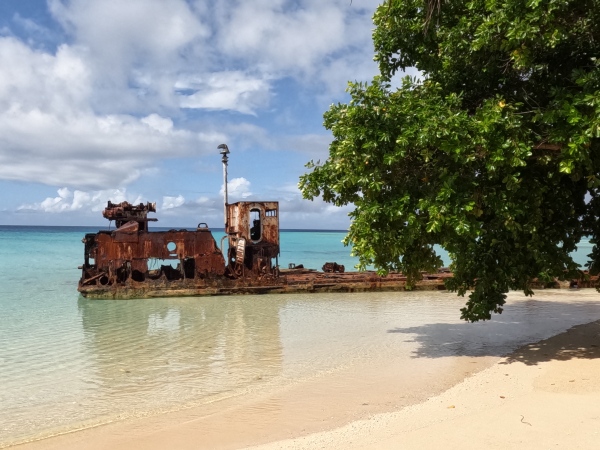
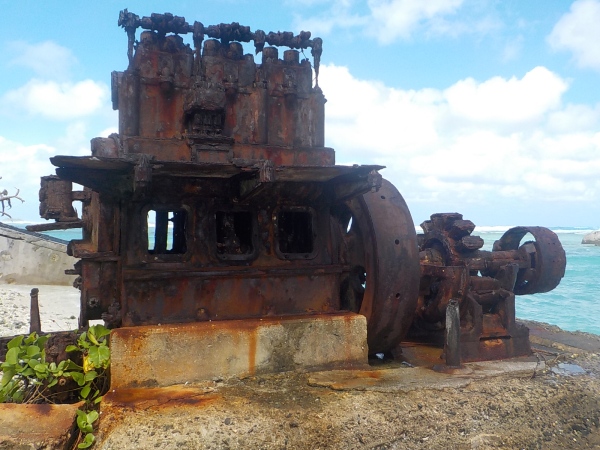
Walking on Maloelap, we immediately saw World War remnants built or brought by the Japanese military. I was very impressed by the quality, especially considering all the materials had to be shipped to this remote island nearly a century ago.
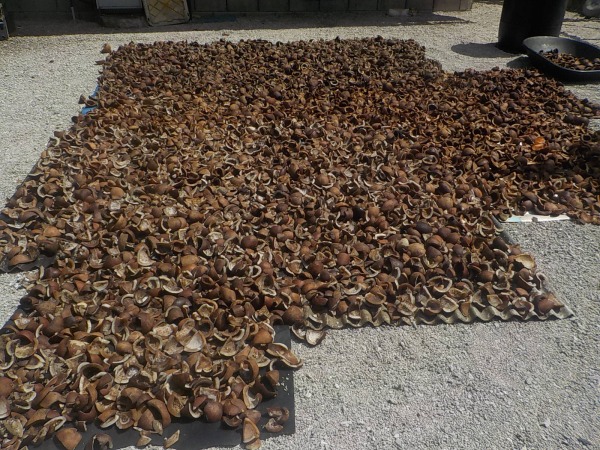
The islanders’ main income comes from coconuts. They gather them on their property, peel them, crack the shells, and scoop out the meat. This meat is then dried on a fire grill—using the coconut shells as fuel—and dried again on the ground in the sun. The outcome of this hard work is Copra.
I asked a local the selling price per bag. My calculations showed they receive about one US dollar for one pound of copra, which takes an average of 2.5 coconuts. I remember the wholesale price of coconut shells was 25 cents each when we sailed in San Blas, Panama, a decade ago. Considering the intensive labor required for copra, the coconut price here is cheaper than in the Caribbean.
John wanted to buy a can of Coca-Cola in a small store, but for the first time in all our years of sailing, he was unable to get one. Until now, he had never failed to find a Coca-Cola anywhere in the world, even on the tiniest island—a fact that, knowing him, made me invest in Coca-Cola stock a while back!
The supply ship has not been to the island for a long time, and the next delivery date is unknown. Consequently, the stores have virtually nothing to sell. Rice is the main food, being the cheapest grain. I wondered how much rice each household keeps on hand. Catching fish does not seem to be an issue, but relying on fish as a main dish exclusively, if one had to, is not healthy.
While walking, four school-age children (about 9 to 12) naturally grouped up with us and followed us. They were quiet initially but quickly started showing off their “boy behavior.” When beautiful birds flew by, each child threw a stone to try and hit one. I stopped them. Then, a boy pointed at a lizard and a hermit crab and asked if I wanted to watch him kill them. I firmly said, “NO!”
Soon after, I saw a boy climb a coconut tree and drop six green coconuts for us to drink. I worried he might fall, as there is no hospital on the island. The boys cracked the coconuts open by hitting them on a rock or a hard tree, and we all enjoyed the fresh, sweet water.
On the way back, John taught them how to whistle and how to make sounds with a leaf held between two thumbs. We took them to our boat and shared cereal biscuits and a drink made with an orange-flavored vitamin tablet. They weren’t thrilled with the Australian biscuits and didn’t drink much of the vitamin water, but I couldn’t offer them tea or coffee.
When we brought them back to the beach, John showed them how to play with a Frisbee. I gave each child a pair of flip-flops—some were too small, some too big. Seeing how rough the boys were, I wondered how long they would last…
After checking the weather, we decided to skip Wotje Atoll and head to Likiep Atoll, departing at 7 a.m. the next day.
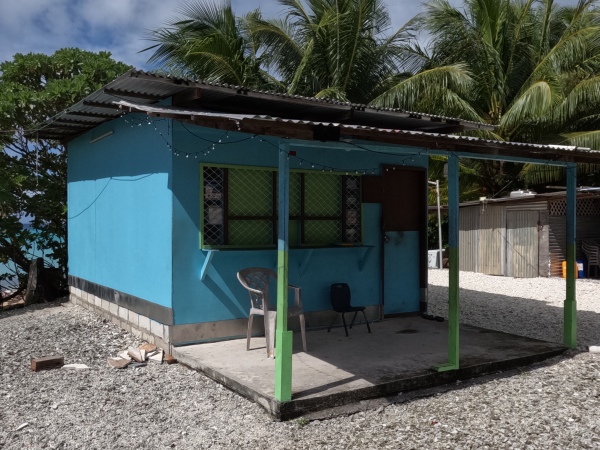
<Photos of World War History and Remnants>