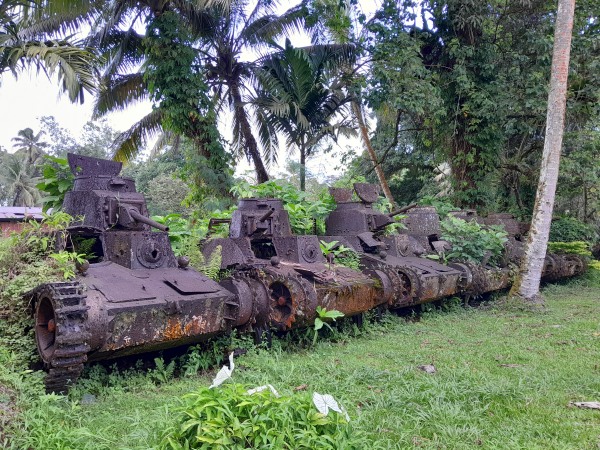
World War II Japanese Tanks, Pohnpei, The Federated States of Micronesia
(January 16 – February 6, 2026) Similar to the Marshall Islands, the Federated States of Micronesia (FSM) spans a vast ocean territory. Pohnpei is the capital of the FSM and one of its four states. The other three are Kosrae, Chuuk, and Yap. Located roughly halfway between Honolulu and Manila, the island is home to incredibly friendly people. During our stay, we hardly saw any other tourists. The weather was consistently hot and humid. The currency is the US Dollar, there is a US Post Office, and US citizens can live here without a visa.
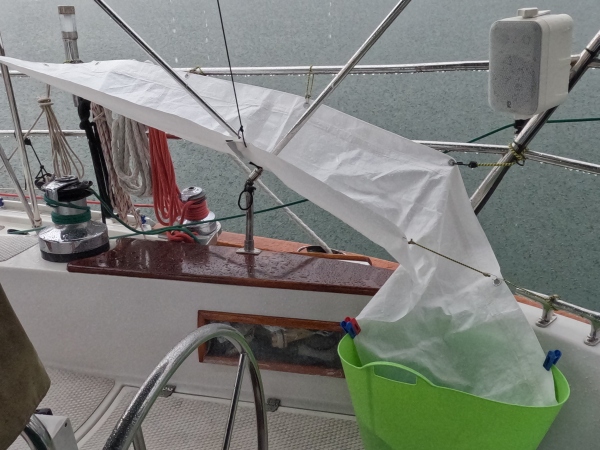
It rained frequently. When it was dry and sunny, we explored the ancient ruins and waterfalls. When it rained, I collected rainwater for cooking and cleaning. While John had no issues drinking the rainwater directly, I only tried it once—it tasted surprisingly sweet.
I often check water quality using a TDS (Total Dissolved Solids) meter. This device measures the concentration of dissolved minerals, salts, and organic matter in water, expressed in Parts Per Million (ppm). A lower number indicates purer water. I noticed that bottled water from the local stores ranges from 0 to 100 ppm, while the water from our onboard water maker is currently around 300 ppm. In contrast, the rainwater I collected in Pohnpei measured only 40 ppm. There was something truly special about collecting such pure water in the middle of the Pacific Ocean!
***Discouraged by locals’ warnings and reports of overcharged fees from fellow sailors, we made the difficult decision to skip Chuuk Lagoon, next stop previously planned. Though John had always dreamed of diving there, we chose to sail straight to Guam instead.
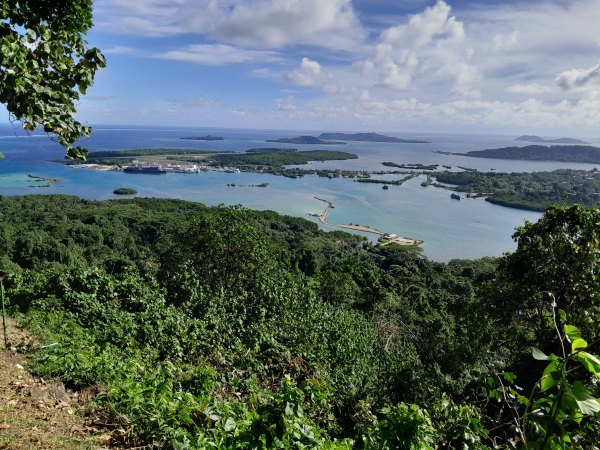
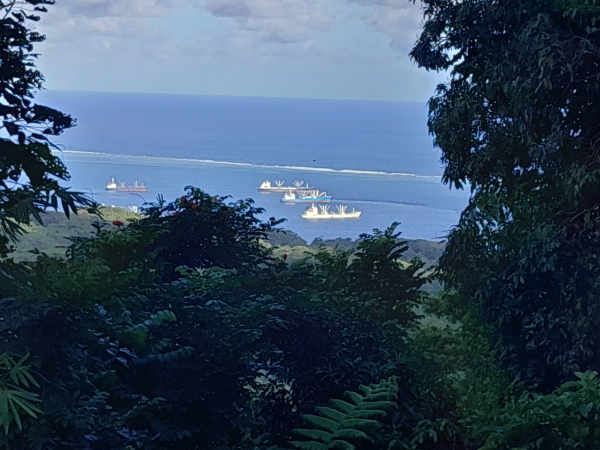
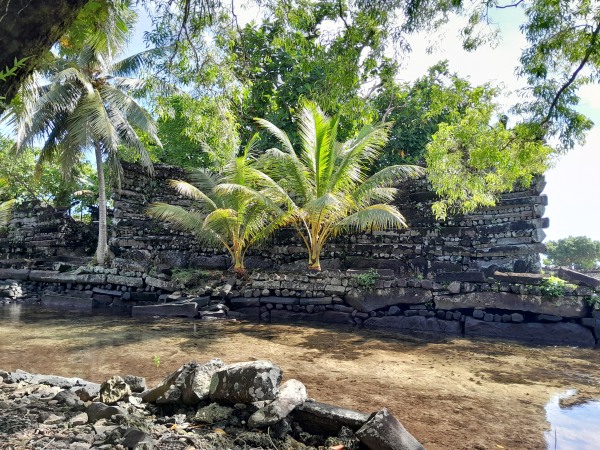
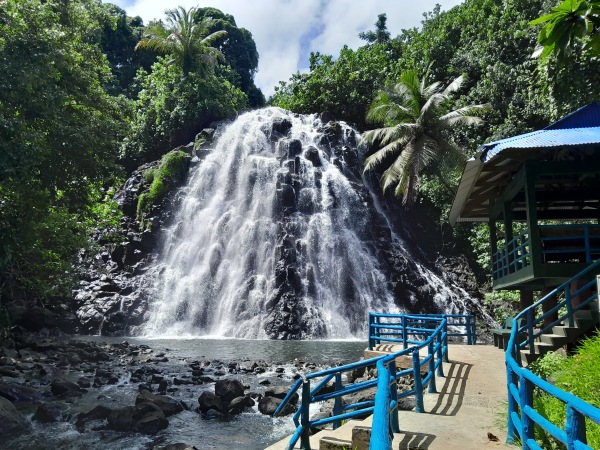
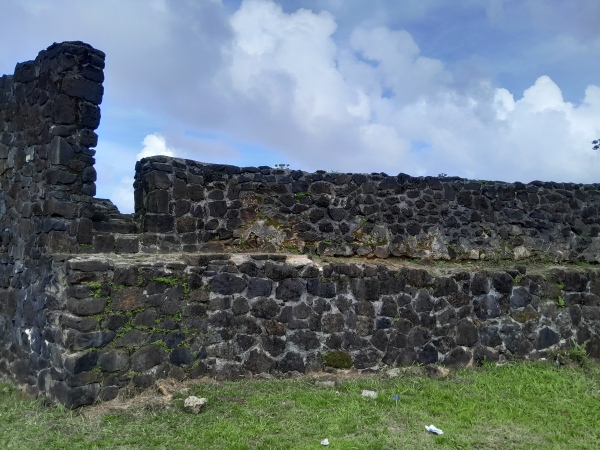
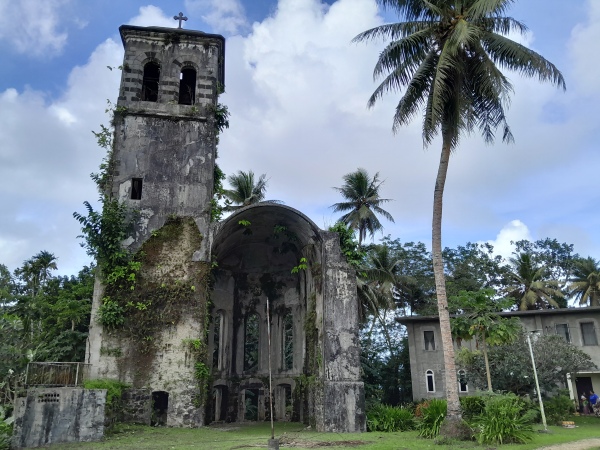
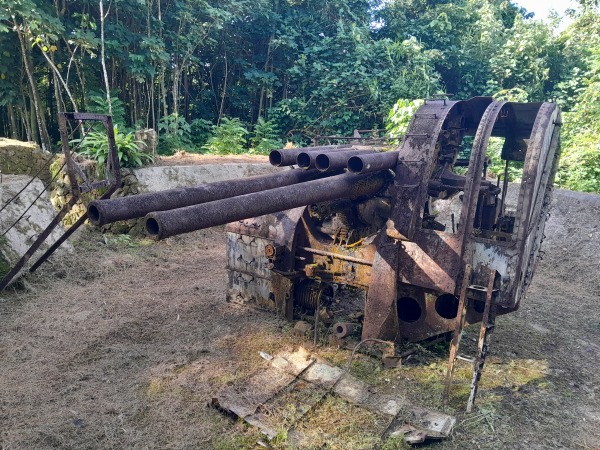
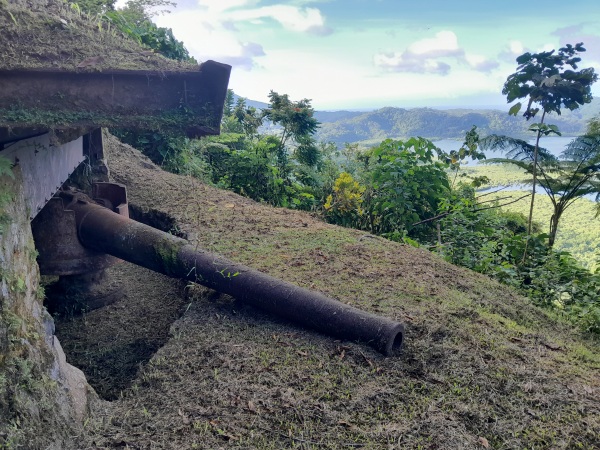
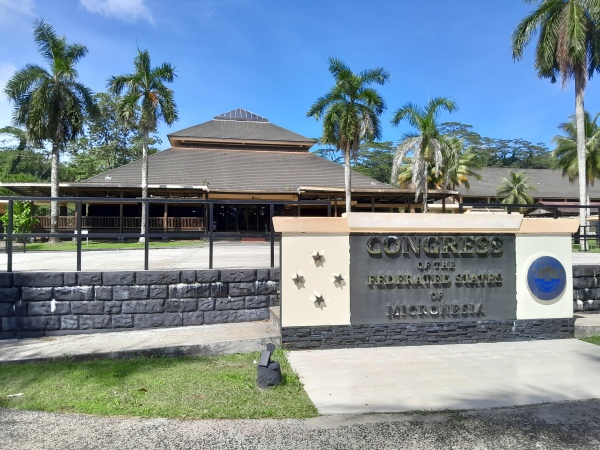
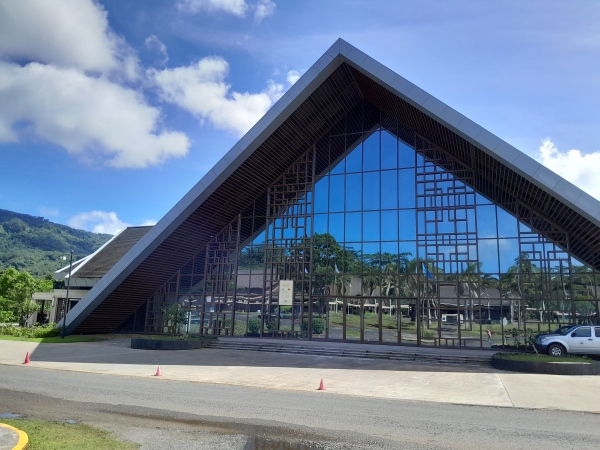
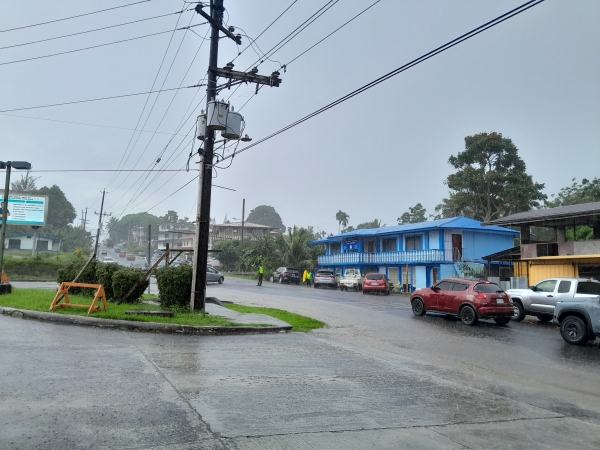
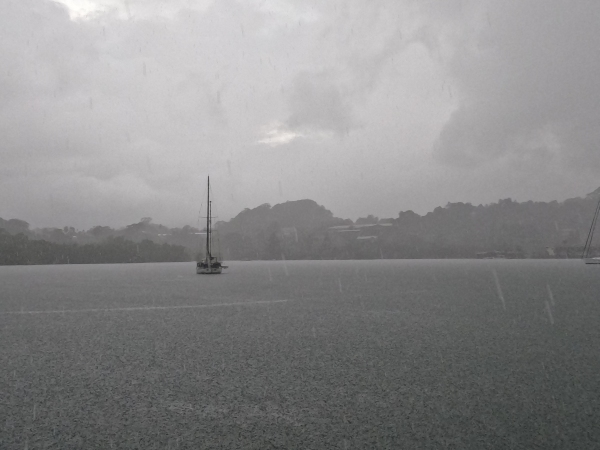
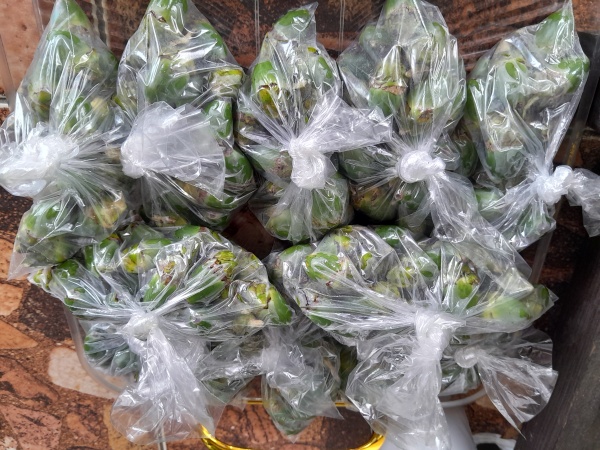
Well Protected Pohnpei Harbor, MicronesiaFishing Vessels anchored Leeward side of the islands, Pohnpei, Micronesia“Nan Madol” Ruins: One of the most amazing man-made compounds in the world. It is a series of canals and islands that, until the mid-1600s, housed the royalty of Pohnpei. Human labor made it from huge basalt pillars and boulders. It dates back roughly to the year 1180. Today, much of it covered in jungle. Pohnpei, MicronesiaKepirohi Waterfall: It cascades down a rocky basalt face into a natural pool. Pohnpei, MicronesiaSpanish Walls: “The Caroline Islands, within which the island of Pohnpei is currently included, were visited on 22 August 1526 by the Spanish explorer Toribio Alonso de Salazar. On 1 January 1528, the explorer Alonso de Saavedra took possession of the islands of Uluti in the name of the King of Spain. The archipelago was visited in 1542, by the Matelotes Islands in 1543 and 1545, and by Legazpi in 1565.”, Pohnpei, MicronesiaGerman Bell Tower, (“After the Spanish–American War of 1898, Germany bought the island from Spain; under German sovereignty, the colony was officially named Kolonia.”), Pohnpei, Micronesia Japanese WWII Anti-Aircraft Gun, Pohnpei, MicronesiaJapanese WWII Coastal Battery Gun, Pohnpei, MicronesiaCongress Building, Pohnpei, Micronesia Convention Center, a China-aided project officially opened in May 2025, Pohnpei, MicronesiaA traffic officer directs vehicles through the intersection during a heavy downpour.” There are no traffic lights on the entire island. Pohnpei, MicronesiaRainy Day at Anchorage, Pohnpei, MicronesiaMy portable rainwater capture system worked—during a heavy downpour, it filled the green container in less than 10 minutes!, Pohnpei, MicronesiaBetel nut is widely sold in stores across Pohnpei, and many local people are addicted to chewing it. The only thing I dislike about the island is seeing people spit in public after chewing. It’s also clear that frequent users often suffer from recessed gums and damaged teeth.